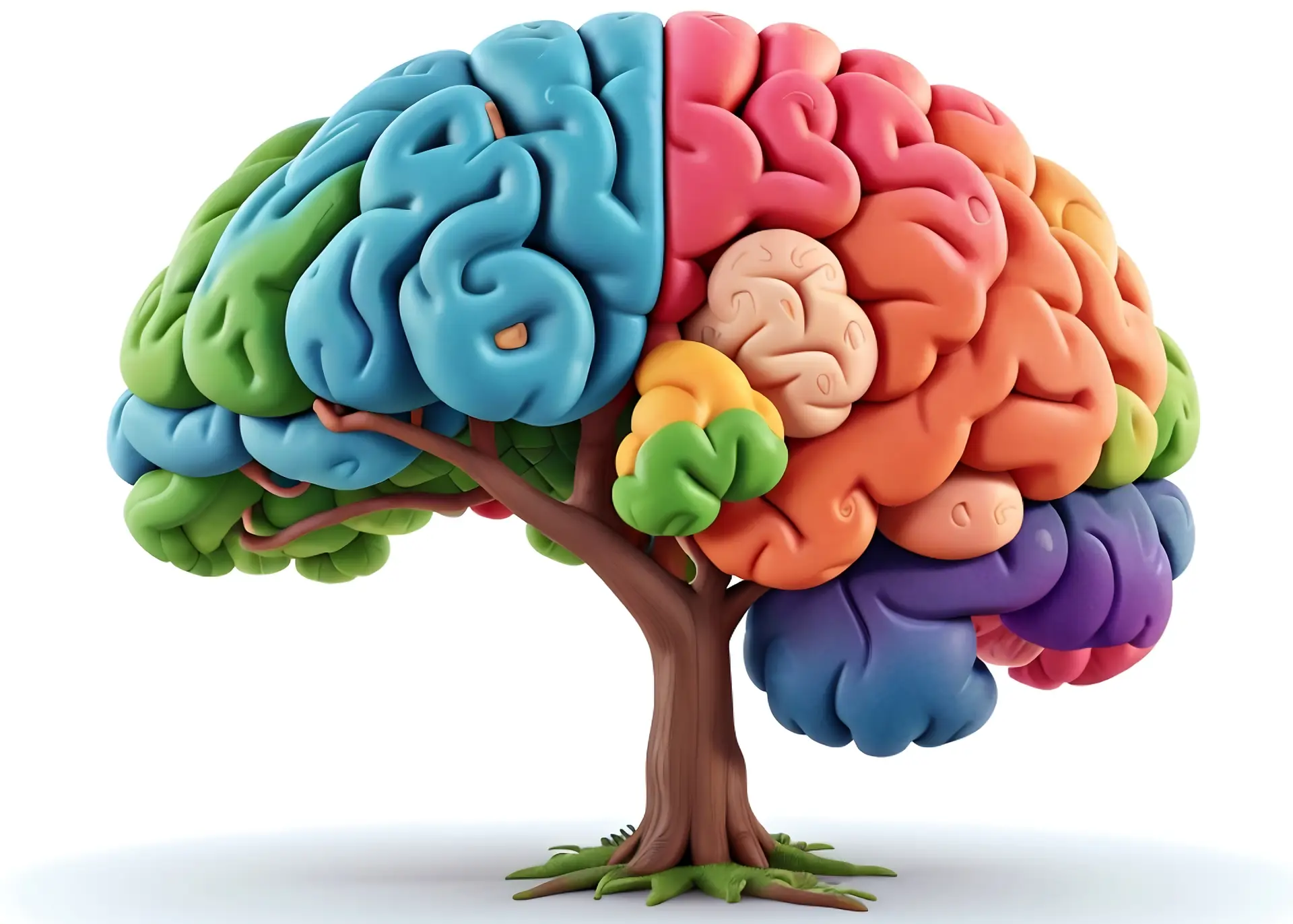
The IWBMC™ and Learning Style
The IWBMC™ recognizes there is more at play with academic achievement than simple repetition of content and embraces the understanding that a complex set of neurodevelopmental, neurobiological, and emotional-behavioral factors must synchronize and assimilate to support academic achievement. To address these components, the IWBMC™ assesses areas required for academic achievement as outlined in the Whole-Brain Learning Style. This whole-brain approach considers all the brain’s cortical regions involved in academic achievement and key components within the neurodevelopmental, emotional-behavioral, and physiological areas. Considering all these components allows the IWBMC™ to address root challenges and any barriers to learning.
A core aspect of the Whole-Brain Learning Style is understanding an individual’s learning style and hemispheric dominance, or how the brain processes information based on its specialized functions. In the following blog post, we’ll explore the significance of hemispheric specialization and its profound impact on learning and development.
Understanding Hemispheric Specialization
Have you ever wondered why you instinctively use one hand over the other? Or why do you favor one eye when looking through a telescope? These natural preferences stem from our genetic predisposition to develop a dominant hand, eye, ear, and foot. An individual’s dominance profile does not simply reflect their hobbies, such as gardening, painting, or solving puzzles. Instead, it plays a crucial role in processing information, learning, and interacting with our environment.
Our brains are divided into two hemispheres, the left and the right, each responsible for different functions. While both sides work together, hemispheric specialization leads to a preference for using one hemisphere over the other, particularly when learning new information or under perceived stress. When an individual develops a clear dominance profile, consistently favoring one hand, foot, eye, and ear, it indicates a well-organized nervous system. Conversely, when dominance remains mixed or unclear, it may suggest that foundational brain regions need further refinement.
How Hemispheric Dominance Develops
The journey toward hemispheric specialization begins long before a child picks up a pencil or reads their first book. Brain development is focused primarily on the right hemisphere in the womb and throughout the first two years of life. Therefore, for infants, developing gross motor skills and taking in the “big picture” of the world around them is essential within the first year of development.
Around age two, the brain shifts focus to the left hemisphere, coinciding with language development and early fine motor control. This back-and-forth process continues throughout childhood, with the brain alternating its emphasis between the left and right hemispheres. By age six, a child’s dominant hand, eye, foot, and ear should be well-established, and by age 10, the brain reaches its adult size.
But what happens when dominance isn’t fully developed? It can lead to learning inefficiencies, language delays, and difficulty with regulation as the brain struggles to communicate efficiently between hemispheres.
Understanding Left Versus Right Hemisphere Functions
Each hemisphere of the brain is responsible for different cognitive and sensory functions.
- Right Hemisphere
- Big-picture thinking
- Emotional processing
- Math reasoning
- Social skills
- Abstract concepts
- Processing strong scents (e.g., peppermint, eucalyptus)
- Processing darker colors (e.g., blue, purple, dark green)
- Left Hemisphere
- Detail-oriented thinking
- Logical reasoning
- Language and verbal communication
- Word recognition and reading
- Mathematical calculations
- Positive emotions
- Processing sweet scents (e.g., lavender, strawberry)
- Processing bright colors (e.g., red, yellow, orange)
The Link Between Hemispheric Dominance and Learning Challenges
The way our brains process information directly affects how we learn. The most efficient dominance profile for learning is lateral (same-sided) dominance, particularly when all dominant senses align with the right side of the body (indicating left-hemisphere specialization). Since the left hemisphere houses most academic functions, individuals with left-hand, eye, or ear dominance may experience more learning challenges. For example, an individual struggling with reading or writing might not just have a hard time with letters; the root issue could stem from how their brain is wired for dominance. Many learning challenges, including dyslexia, dysgraphia, dyscalculia, or reading comprehension difficulties, can be traced back to how well the brain’s hemispheres communicate.
Regarding dyslexia, individuals with left-eye dominance may struggle with reading left to right, as their dominant eye sends information to the right hemisphere and is more readily drawn to the right visual field. This can create inefficiencies in processing, leading to letter reversals, slow visual processing speeds, and difficulty decoding words.
Similarly, an individual with left-ear dominance may struggle with auditory learning, as auditory information must first travel to the right hemisphere before crossing over to the left, where language processing primarily occurs for many. This additional step can lead to delays in auditory comprehension, trouble following directions, and even stuttering.
Supporting Learning Styles
If an individual presents with mixed dominance or has difficulty processing information, targeted strategies can help support how they learn and synthesize information. Something as simple as highlighting the left side of the page, allowing typing for written assignments, or allowing extra processing time for vocal instruction can make a significant difference. Additional common support strategies to support learning style are included below:
- Presenting learning materials at midline
- Early reflex integration exercises
- Cross-lateral movement activities
- Using high-interest content to maintain engagement
- Covering portions of the page to reduce distractions
- Pairing visual content with auditory cues
- Incorporating adaptive writing tools
- Providing extra time for written tasks
By understanding the role of hemispheric dominance, we can move beyond traditional teaching methods and create individualized learning approaches tailored to how a child’s brain is wired. Whether a child struggles with reading, writing, or math, the key to unlocking their potential may not be in more practice or repetition but rather in ensuring that their brain communicates efficiently.
Please check out our online store – courses, training, our Online Resource Series, and more are available!
Interested in diving deeper into topics like this or learning formally about our methodology and approach? Check out our professional training opportunities. We also offer caregiver training in the IWBMC™!