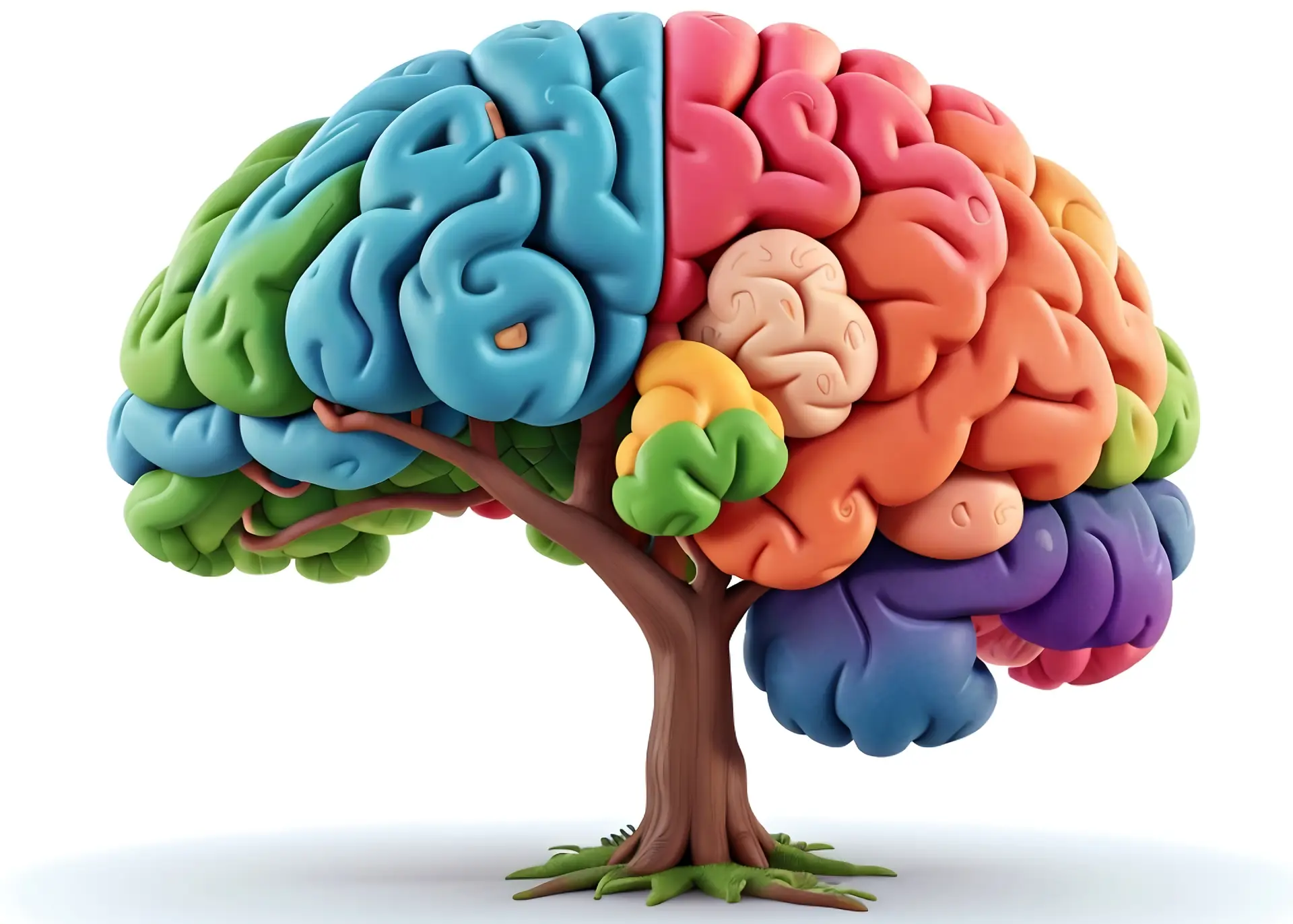
A key component of the Interpersonal Whole-Brain Model of Care® (IWBMC™) is addressing an individual’s sequential processing abilities. Processing, in essence, is a foundational developmental skill and refers to how we take in, make sense of, and respond to the world around us. It forms the cornerstone of many essential functions in daily life, including language development, learning, executive functioning, and environmental awareness. Our ability to process information from the world around us lays the foundation for higher-level cognitive skills, allowing us to function more independently and effectively in various settings.
The Importance of Processing
When individuals experience a lack of interhemispheric communication, they may face functional challenges, particularly in learning, emotional regulation, and mobility. Understanding the benefits of cross-lateral activities can offer valuable insight into their role in brain development, emotional well-being, and learning success.
The Impact of Processing on Development
In typical development, a child’s processing ability increases with chronological age, and the brain becomes better equipped to handle increasingly complex tasks and information. At around the age of seven, most individuals achieve average processing abilities, which is reflective of being able to take in seven distinct pieces of auditory and visual information. Therefore, the average adult can process seven pieces of information at a time. To better understand how processing abilities evolve, let’s look at some key milestones that reflect typical age-based processing development:
1 Year of Age = Processing 1’s
- First words or vocalizations (e.g., “mama,” “cup”)
- Begins to follow simple, one-step directions
- Behavior is focused on immediate desires but can be easily redirected
- May begin to show basic play with toys
2 Years of Age = Processing 2’s
- Begins stringing together words or sounds (e.g., “mama up,” “want cup”)
- Follows one-step directions and starts following two-step directions
- May experience frequent tantrums and is less easily redirected
- Wants immediate gratification but begins to understand delayed reinforcement
- Engages in more appropriate play with toys and starts parallel play
3 Years of Age = Processing 3’s
- Uses 2–4-word phrases (e.g., “mama, hold me,” “I want cup”)
- Follows one, two, and occasionally three-step directions
- Demonstrates a better understanding of delayed reinforcement
- Begins associative play, which is vital for developing social skills, language, and problem-solving
Functional Challenges Due to Low Processing Levels
When processing skills are underdeveloped or not targeted consistently, individuals may experience cognitive and functional growth challenges. Some of the functional challenges associated with low processing levels include:
- Inability to Follow Multi-Step Auditory or Visual Directions: Without the ability to process multiple pieces of information at once, individuals may struggle to follow instructions or directions that involve more than one step, impacting academic, social, and activities of daily living.
- Challenges with Academics: Processing difficulties can directly impact learning, as individuals may have trouble retaining information, following multi-step processes, or completing tasks that require processing speed and attention.
- Limited Language Abilities: Processing challenges can correlate to decreased or delayed language development due to the inability to take in more complex auditory information.
- Behavioral Challenges: Individuals with lower processing levels may exhibit behavioral difficulties, such as difficulty understanding cause and effect, impatience, or an inability to regulate emotions.
- Social Skills Challenges: Without the ability to process social cues, clients may appear socially immature or distant. They may struggle to follow along or reciprocate conversation, misinterpret non-vocal cues, or have difficulty initiating various topics of conversation.
- Difficulty with Play: Individuals who struggle with processing may not engage in appropriate play behaviors with peers, which can affect their social and cognitive development, as play is essential for learning cooperation, negotiation, and problem-solving.
- Sustained Focus and Attention Issues: Low processing skills often translate to difficulty with focus and attention, which can impact completing tasks, learning, and engaging in activities that require sustained cognitive effort.
- Independence and Daily Living Skills: Processing deficits can make completing daily tasks such as toileting, self-care routines, and vocational-related tasks challenging. As a result, individuals may require increased prompting, reminders, and visual support tools to complete tasks effectively.
Addressing Processing Abilities for Improved Outcomes
The key to overcoming the challenges correlated to low processing abilities lies in targeted and structured practice. Consistently engaging individuals in activities that stimulate both auditory and visual processing can make a significant difference over time. Regular, focused exercises provide the brain with the necessary stimulation to promote growth, ensuring that individuals can develop the skills they need to succeed in the classroom, social settings, and everyday life.
These exercises can be fun and engaging while effectively targeting critical cognitive functions such as attention, memory, and problem-solving. Below are some easy, everyday activities that can be used to address processing abilities at home:
- Memory card games
- Simon Says
- Environmental scavenger hunt
- Sequencing tasks
- Interactive storytelling
- Building/replicating block patterns
- I Spy
Conclusion
By strengthening processing abilities, we enhance an individual’s cognitive skills and lay the foundation for more advanced learning, greater independence, and improved functioning in all areas of life. For additional strategies and support, we invite you to explore our website, thejacobsladdergroup.org, and discover the various opportunities for support.
Please check out our online store – courses, training, our Online Resource Series, and more are available!
Interested in diving deeper into topics like this or learning formally about our methodology and approach? Check out our professional training opportunities. We also offer caregiver training in the IWBMC™!