Language development is vital to an individual’s growth, shaping their ability to understand and express their thoughts, emotions, and needs. It begins with receptive language, the ability to comprehend words and concepts, before transitioning into expressive language, where an individual may communicate using gestures, signs, or spoken words.
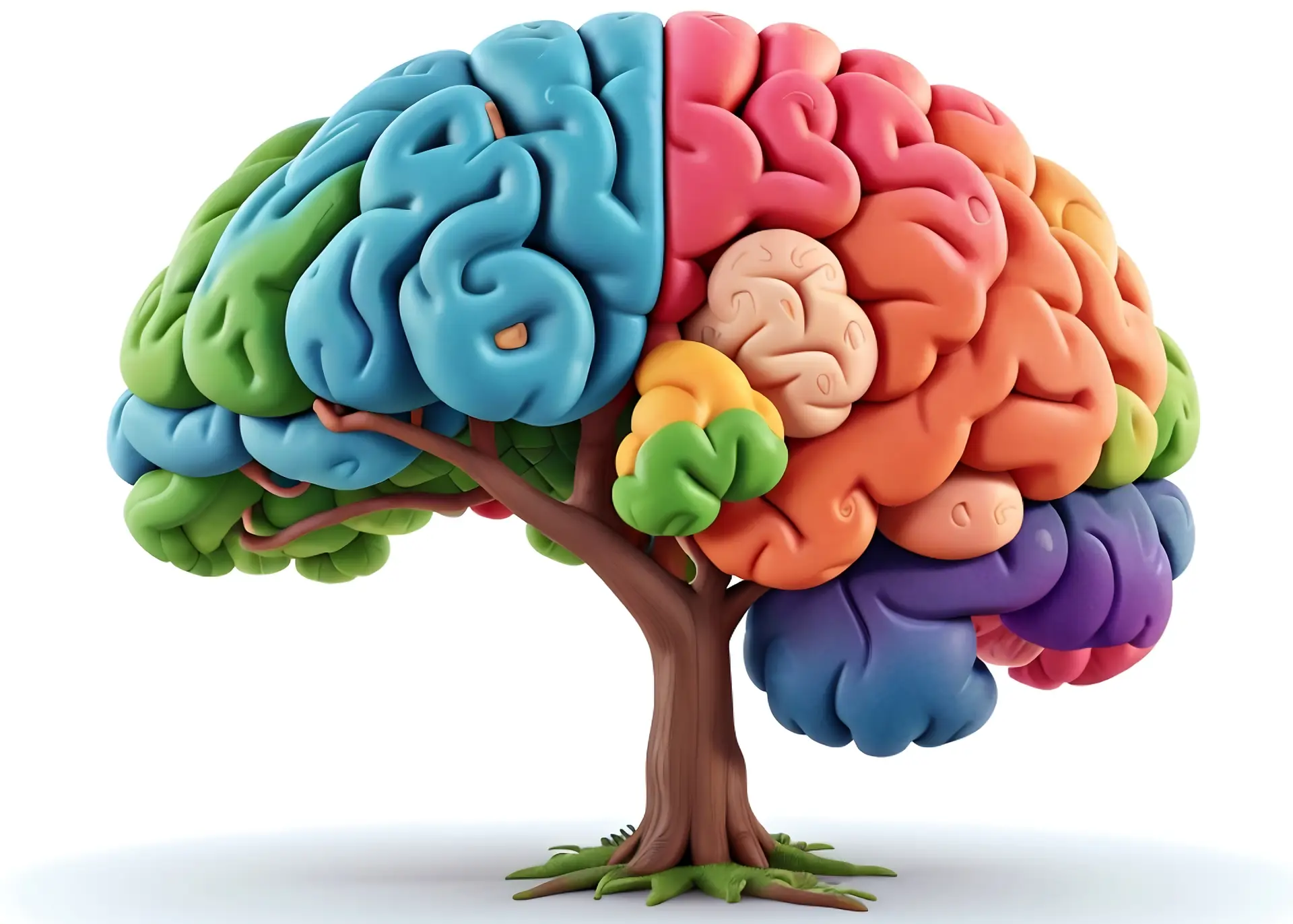
At Jacob’s Ladder, the IWMBC™ recognizes that functional language development relies on a complex interplay between various neurodevelopmental, neurobiological, and environmental factors. Therefore, the IWBMC™ provides a unique, whole-brain approach to language development through the Whole-Brain Language Program. This comprehensive approach considers all cortical regions involved in language milestones, addressing key areas such as:
- Auditory nerve receptivity and assimilation of tones and frequencies
- Oral motor movements
- Reproduction of simple sounds
- Auditory sequential processing rate
- Receptive and expressive language
- Articulation
- Complexity of original thought
- Daily expectation of communication and generalization of language skills
- Hemispheric dominance
Expanding on the importance of communication expectations and the generalization of language skills, parents and caregivers play a crucial role in fostering language development by using specific strategies in daily interactions. Below are four key approaches to supporting a child’s ability to understand and express language effectively.
1. Narrate the Day: Strengthening Receptive and Expressive Language
Why This Matters
Parents and caregivers are encouraged to practice auditory flooding, a technique in which they narrate their actions and observations aloud to their children. This constant exposure to language helps children anchor their experiences to words, strengthening their receptive and expressive language skills.
How to Implement
- Narrate the Environment:
- Use complete, clear sentences when describing what you are doing. For example, instead of saying, “Mommy’s getting wa-wa,” say, “Mommy is thirsty. Let’s get a cup of water.” This helps children associate the correct vocabulary with items that can be generalized outside the home environment.
- Use Auditory Flooding during Neutral Moments:
- Avoid excessive narration during tantrum episodes or meltdowns, as children may struggle to process language in heightened emotional states. Instead, use narration when they are calm and engaged to support processing.
2. Encourage Identifying Familiar Items to Support Expressive Communication
Why This Matters
As children develop their language skills, they need opportunities to identify and name familiar objects. This practice strengthens the neural pathways responsible for communication and increases their ability to express themselves independently.
How to Implement
- Use Books and the Environment to Reinforce Language:
- While reading, encourage the child to point to or name objects: “I see a cow! A cow says ‘moo’! Can you point to the cow? “If they do not respond, guide them: “Here’s the cow! Now, you point to the cow.”
- Encourage Object Identification During Daily Routines:
- Hold up two familiar objects and ask the child to identify them: “We need a spoon for our yogurt. Can you show me the spoon? If the child does not respond, provide guidance: “Here’s the spoon! Now, you show me the spoon.”
- Allow Ample Processing Time:
- Give the child up to 15 seconds to respond before repeating a question or identifying the item.
3. Maintain Language Expectations to Strengthen Communication Skills
Why This Matters
Children need consistent expectations to help them build strong communication skills. If they are not encouraged to attempt to provide language at their specific challenge point, they may revert to maladaptive communication techniques to obtain their wants and needs.
How to Implement
- Encourage Language Expectations Before Meeting Needs:
- If a child typically points to a cup when they want a drink, encourage them to attempt saying “cup” before handing it to them. Even if their attempt is imperfect, requiring some form of expressive output reinforces the expectation that language is how we communicate needs.
- Increase Complexity Over Time:
- Once a child can say “cup,” encourage them to expand: “cup, please” or “I want a cup.”
4. Promote Original Thought Language to Develop Meaningful Communication
Why This Matters
For some children, particularly those with neurobiological differences, communication may rely heavily on scripted or echolalic language—repeating phrases from media or past interactions instead of generating original speech. While scripting can be an early step in language development, excessive reliance on it can impact functional language use and social development.
How to Implement
- Redirect Scripted Speech with Interactive Questions:
- If a child repeats a phrase from a movie, redirect with an engaging question to encourage original thought. For example, “What’s your name?” or “Who flies an airplane?”
- Incorporate Movement to Support Language Processing:
- Cross-lateral movements help activate different brain regions and support language retrieval.
- Opposite shoulder taps
- Cross high-fives
- Cross March
- Cross-lateral movements help activate different brain regions and support language retrieval.
- Limit Screen Time:
- Excessive screen time engagement can negatively impact language development, including articulation, processing of various tones, auditory processing, and social skills development.
- Use Visual Supports to Support Communication:
- Provide cue cards or conversation starters to encourage children to generate new ideas in speech.
Conclusion
Language development is a journey, and every child progresses at their own pace. Parents and caregivers can create an environment that supports strong communication skills by implementing auditory flooding, encouraging identification, maintaining language expectations, and promoting original thought language.
With patience, consistency, and engaging strategies, children can develop the language skills to express themselves confidently and independently.
Please check out our online store – courses, training, our Online Resource Series, and more are available!
Interested in diving deeper into topics like this or learning formally about our methodology and approach? Check out our professional training opportunities. We also offer caregiver training in the IWBMC™!