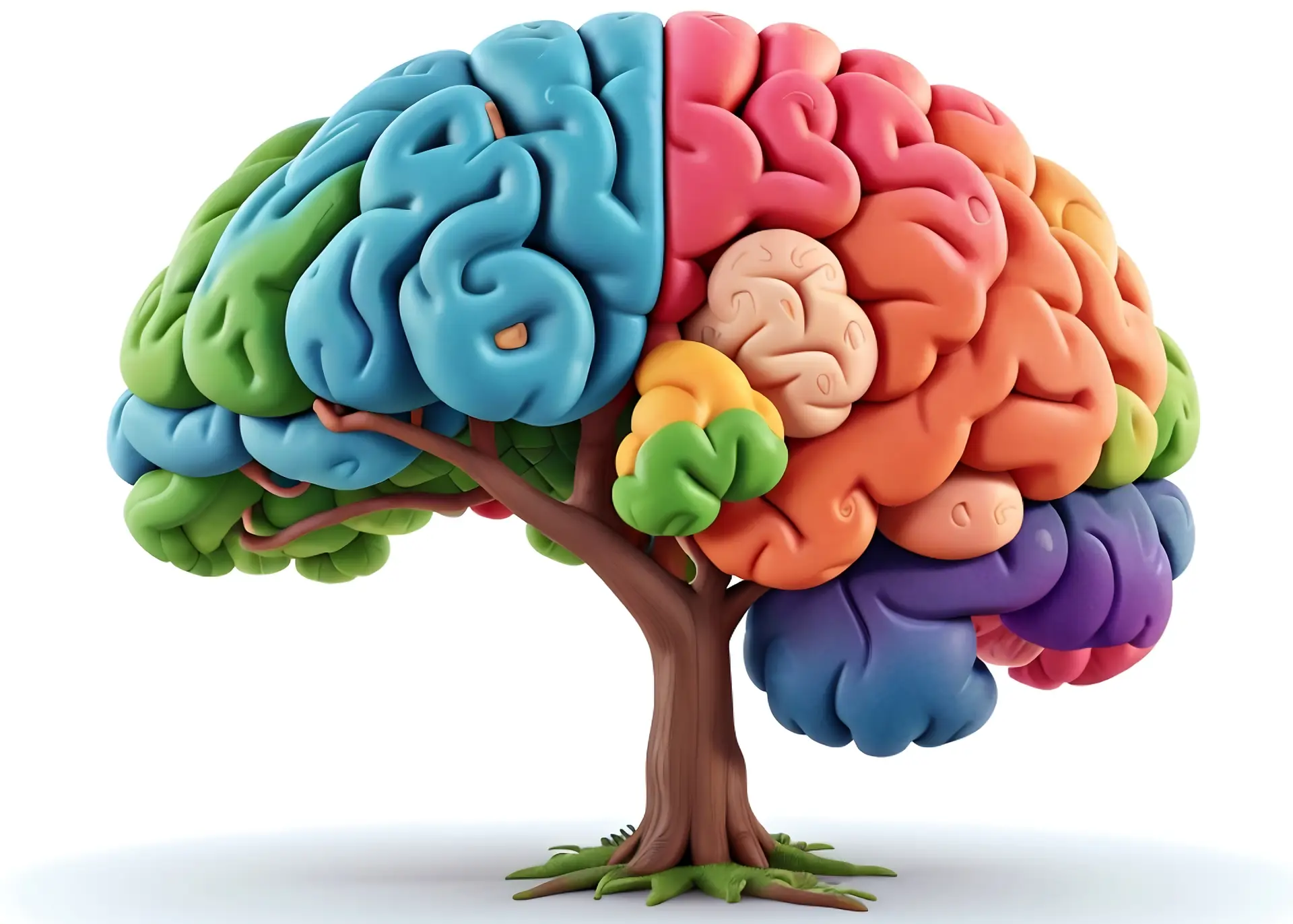
Over the last thirty years, our cutting-edge, patented methodology, The Interpersonal Whole-Brain Model of Care® (IWBMC™), has transformed the lives of over 4,000 individuals and helped them unlock their limitless potential. Grounded in the scientifically proven principle of neuroplasticity, the IWBMC™ recognizes that the brain is capable of immense change, regardless of an individual’s age, diagnosis, or level of functioning.
What makes the IWBMC™ unique? It’s a comprehensive approach that looks at the whole person. We consider neurological functioning, learning styles, emotional development, physiology, and social environment while always focusing on each individual’s strengths and personal spirit.
Within the IWMBC™, the Neurodevelopmental element closely examines various indicators contributing to a well-organized central nervous system. One of these indicators, engagement in sensory-seeking tendencies, provides valuable insight into the brain’s pathways and connections. Sensory-seeking tendencies are external manifestations that reflect what occurs internally within the brain and correlate to how individuals interact with their environment.
Within this blog post, we will delve further into sensory-seeking behaviors and, in alignment with the principle of neuroplasticity, why it is critical to interrupt and redirect these behaviors to support growth and healing with the brain.
What are Sensory-Seeking Behaviors?
Sensory-seeking behaviors often manifest as repetitive and maladaptive behaviors that an individual completes to increase arousal levels, indicating dysfunction within the central nervous system. Although engagement in sensory-seeking tendencies is traditionally viewed as coping or calming mechanisms, the IWBMC™ recognizes that consistent and frequent engagement in sensory-seeking strengthens maladaptive pathways in the brain, limiting the development of new or increased capacity. The principle of neuroplasticity can work for us, or against us.
For example, envision a dirt trail weaving through the woods. Initially, it may be challenging to stay on the trail; however, as the trail becomes more traveled, it becomes increasingly visible and formed. Over time, the more the trail is traveled, the more ingrained it becomes, until one day, maybe it’s a dirt road, which then develops into a paved road and a super highway. This analogy can also be applied to the neuronal pathways in the brain. The more we engage specific pathways, the easier they become to access. Therefore, if individuals are consistently allowed to engage in sensory-seeking tendencies, this becomes their preferred way of regulation versus developing more refined self-referencing and regulation abilities.
How Sensory-Seeking Behaviors Impact the Brain

The following qEEG image provides insight into the brain’s electrical activity and communication patterns. Red lines indicate over-communication between regions (super highways), whereas blue lines indicate a lack of communication (dirt roads). This lack of communication from the lower brain regions up to the higher cortical levels contributes to difficulty synthesizing and appropriately processing incoming stimulation from the environment.
Types of Sensory-Seeking Behaviors
Common forms of sensory-seeking behaviors include:
- Vestibular: constantly moving, pacing, jumping, tumbling, swinging, inverting (hanging upside down)
- Auditory: scripting statements or phrases, echoing statements, humming, singing, plugging ears, persistently rewinding or fast-forwarding music or videos with sound
- Visual: corner vision, fixation on lines/edges, fixation on spinning objects, wiggling fingers within peripheral vision, repeatedly rewinding or fast-forwarding videos
- Tactile: seeking out cuddles, squeezing into small spaces, rubbing hands and feet on surfaces, teeth grinding
Strategies to Address Sensory-Seeking Behaviors
Within the IWBMC™, we recognize this correlation between seeking stimulation and the requirement for providing organized input. When addressed consistently, this changes the brain’s wiring.
Parents and caregivers are highly encouraged to interrupt engagement in self-stimulatory behavior and provide therapeutic input and stimulation to give the brain organized stimulation as a means of redirection. This organized stimulation reduces the client’s need to seek out the stimulation through inappropriate means.
To do this, parents and caregivers can provide input to the sensory system in an organized and systematic way. This input should be organized and implemented for short durations, thus allowing the central nervous system to process the input but not become overstimulated. For example, parents or providers can complete the following activities for one to two minutes to redirect engagement in self-stimulatory behaviors:
- Vestibular: structured jumps on a small trampoline (jump five times and then pause for three seconds), jumping jacks
- Auditory: ask various social questions, encourage reproduction of simple sounds, encourage identification of items within the environment
- Visual: flight light stomp and tag, visual attention to items
- Tactile: fully-body deep squeezes
The brain is truly remarkable in its ability to adapt and grow. When sensory-seeking behaviors are interrupted and redirected through organized, intentional approaches, new neural connections are formed, expanding the brain’s capacity for change. For additional strategies and support, we invite you to explore our website, thejacobsladdergroup.org, and discover the various opportunities for support.
To purchase and access our trainings and courses, please visit our online store and check out the Online Resource Series.
Interested in diving deeper into topics like this or learning formally about our methodology and approach? Check out our professional training opportunities. We also offer caregiver training in the IWBMC™!